There are epics, and then there are epics.
At the tail end of March, from literally out of nowhere, the only songwriter to have a Nobel Prize graced us with the 17-minute strong Murder Most Foul, his first genuinely new material since 2012. Yep, eight years ago, Bob Dylan released what was once rumored to be his valedictory album, appropriately titled Tempest. (the title of Shakespeare’s final play.) Let’s just say that, as he promised, the end, it was not.
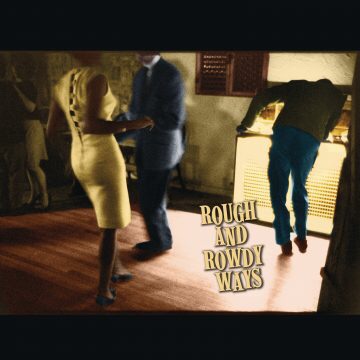
Next birthday, the former Traveling Wilbury will be eighty. And yet, it would be a total understatement to say that his latest effort, Rough And Rowdy Ways, is already a staple of his six decade long discography, and far superior to his recent trilogy of Great American Songbook cover albums. With help from Fiona Apple, longtime guitarist Charlie Sexton, and Heartbreaker Benmont Tench, Dylan managed to cross the poignant storytelling of Blood On The Tracks with the morals and mindsets of Love And Theft and Modern Times. That said, while he managed to keep the modern sound of his touring band flowing, the record as a whole feels unlike anything he’s ever birthed. Yet at the same time, Dylan’s every album has been more or less, hailed as eternally relevant.
In the key of good ol’ C, I Contain Multitudes, loaded with references to Anne Frank and The Rolling Stones, kicks everything off. Immediately following is False Prophet, which could be his two cents on an infinite amount of topics, personal, political, or worldwide.
Who knows where his mindset is these days? I’ve Made Up My Mind To Give Myself To You, for example. Track four. Before the answer becomes blatantly obvious, you spend the first half of the song thinking: Is he talking about a partner, or is he revisiting his born again Christian phase from the early 80s, and running into the arms of God? No matter how one may see it, mortality plays a large role in Dylan’s later work, but he seems more aware than ever that his days on this Earth are numbered.
Perhaps the most exuberant obituary of all time, and the most exuberant song on the album, Goodbye Jimmy Reed, is also thrown in. Dylan waited nearly forty five years after his death to tell religious and musical bits and pieces of the blues legend’s life story. “I can tell they’re Proddie from a mile away,” he croaks as he begs for “that old time religion.” Dylan caused the perspective to jump all over the place from start to finish. So, another thing to wonder is, who exactly is it that’s saying goodbye to Reed?
After nearly ten minutes of adding up elements of Key West to describe, as he put it, a paradise to find immortality, on Key West (Philosopher Pirate), the epic mentioned above began to close out this masterpiece.
Murder Most Foul revolves around the staggering 1963 assassination of President Kennedy. Who, other than Dylan, has spoken (but sung) lines? Practically everyone who remembers that wretched day, from the driver of that open-top limousine, to those who saw Walter Cronkite announce to the world that the President Of The United States was dead, to even JFK himself. “I’m leaning to the left, I got my head in her lap/Hold on, I’ve been lead into some kind of a trap.”
No shit, Dylan remembers when it happened. “I hate to tell you, mister, but only dead men are free,” he laments over accompaniment from a reverb piano and double bass. Along with the thoughts that crossed people’s minds that day came some pop culture references of that era, from The Beatles to Nightmare On Elm Street.
Which brings us to the second half.
With seven minutes left in the song, legendary DJ Wolfman Jack is brought up, said to be speaking in tongues. Sure enough, those last seven minutes of probably the best thing we’re gonna get out of this year, is nothing but a list of requests for the Wolfman, mostly songs and artists that came after JFK’s time: Queen, Billy Joel, The Who, Fleetwood Mac, and even the Eagles (recently revealed to be one of the Bard’s favorite groups) are among those listed.
As usual, Dylan’s poignancy is unbelievable, and right now is an ideal time to drink it in. So, I guess my final question is, why can’t I put my finger on how and why I feel this masterpiece has the magnum opus reputation of Blood On The Tracks, or Highway 61 Revisited? And, with that Never Ending Tour always in place, when did he record all this? Was he waiting for the right time to put out such an exquisite piece of work? No way did he squeeze all this out within three months of quarantine.
Sadly but understandably, we all know that Bobby’s not gonna tell us.
 Josh Bradley Live